 +1 (323) 800 6001
Mediterranean Cruise and Land Packages from the USA
Planned and booked by phone — call +1 (323) 800 6001, 24/7, or send the form for a call back.
2,500+ Google reviewsAnswered 24/7US agency since 2017 · Woodbridge, VA
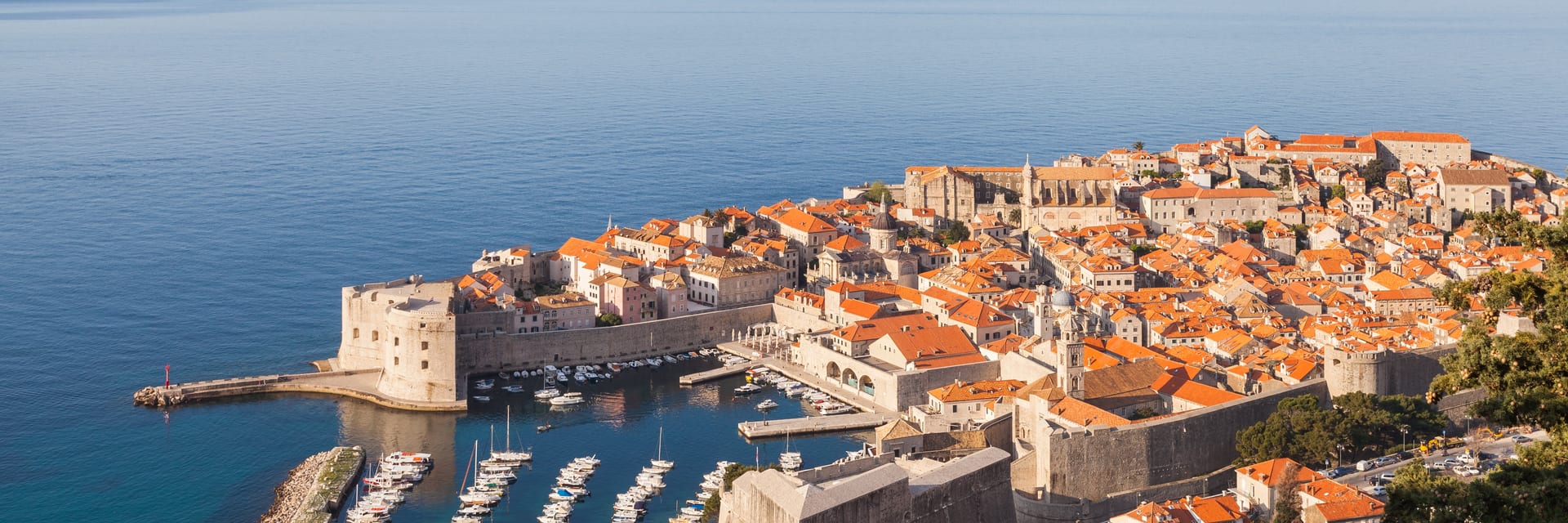
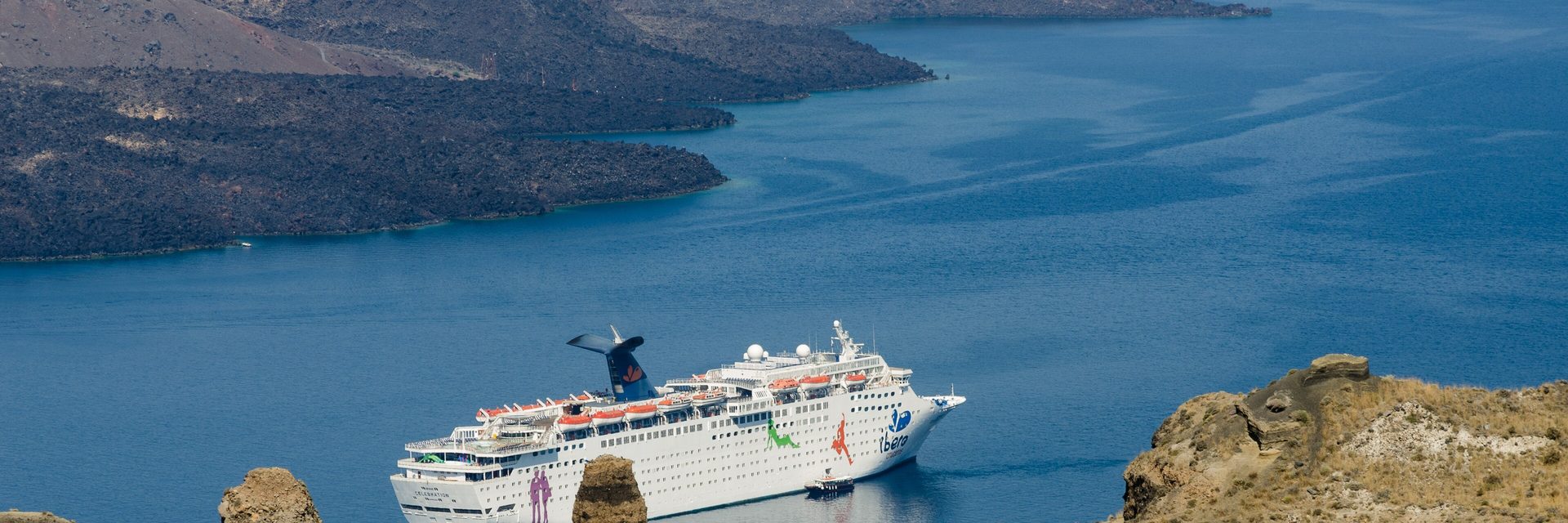
Photo: Diego Delso via Wikimedia Commons, CC BY-SA 3.0
Talk to a travel expert - call +1 (323) 800 6001, 24/7.
Real people, no bots. We plan flights, hotels, transfers and tours together and book everything over the phone. Prefer to start online? Use Plan My Vacation and we call you back.
A Mediterranean cruise on its own gives you Rome for six hours. A cruise and land package gives you Rome properly: three or four nights in the city before or after the sailing, then a week at sea visiting the coast. Fond Travels builds the flights, the hotel nights, the port transfers and the cruise into one plan. Call +1 (323) 800 6001 and a travel expert puts the two halves together for your dates.
This is the single most common regret we hear from travelers coming home from Europe: the ship called at Civitavecchia, the bus took ninety minutes each way, and Rome came down to the Colosseum in a crowd and a scramble back to the pier. The fix is simple and it costs a few nights, not a second vacation. Fly in early, stay in the city, then join the ship rested and use the port days for the coastal towns a ship reaches easily.
Three nights in Rome plus a 7-night sailing
This is the shape we book most often from the USA. Ports vary by sailing and season, so treat the week at sea as a typical example. Twelve days door to door, including the overnight flight out.
| Days | Where | Highlights |
|---|---|---|
| Day 1 | USA to Rome | Late afternoon or evening departure, an overnight flight of about eight to ten hours |
| Day 2 | Rome | Arrive mid-morning, transfer to the hotel, a walk through the old center and an early night |
| Day 3 | Rome | The Colosseum, the Roman Forum and the Palatine in the morning, Trastevere for dinner |
| Day 4 | Rome | The Vatican Museums and St Peter's early, the Pantheon and the Trevi Fountain in the afternoon |
| Day 5 | Civitavecchia, embark | A transfer of about ninety minutes to the port, boarding in the afternoon and sailaway |
| Day 6 | Livorno, Italy | A long day trip to Florence, or the shorter run to Pisa and the Tuscan coast |
| Day 7 | Marseille, France | Provence, the old port, or the calanques by boat along the limestone coast |
| Day 8 | Barcelona, Spain | The Sagrada Familia, the Gothic Quarter, Park Guell and lunch at a market |
| Day 9 | Palma, Mallorca | The cathedral above the harbor, a drive into the Tramuntana hills or a beach afternoon |
| Day 10 | At sea | The one slow day, for the pool, the spa and packing before the last ports |
| Day 11 | Naples, Italy | Pompeii, the Amalfi coast drive or Capri by hydrofoil, depending on the hours in port |
| Day 12 | Civitavecchia to the USA | Disembark early, transfer to the airport and take a midday flight home |
Flights from the USA and the pre-cruise night
There are nonstop flights to Rome, Barcelona, Athens, Lisbon, Milan and Venice from New York, Newark, Boston, Washington, Atlanta, Miami, Chicago, Dallas, Philadelphia and several West Coast gateways, with more routes open in summer than in winter. Eastbound flights leave the USA in the late afternoon or evening and land in Europe the next morning, so you lose a night and arrive tired.
That is exactly why a land stay solves two problems at once. Arriving three or four days before the ship means the jet lag is gone by embarkation day, and a delayed or cancelled flight costs you a morning of sightseeing rather than the entire cruise. We never book a flight that lands on embarkation day from the USA. If you cannot add the city nights, we still insist on at least one night on the ground before you board.
Coming home, most flights from Europe to the USA leave between late morning and mid-afternoon, which fits a morning disembarkation if the port is close to the airport. From Civitavecchia we allow a full morning for the transfer, and from Piraeus we usually suggest a final night in Athens instead of racing for a flight.
When to go: April to October
The Mediterranean cruise season runs roughly April to October, with a handful of shorter itineraries either side.
- April and May: green hillsides, wildflowers, comfortable walking weather and lighter crowds; the sea is still cool for swimming.
- June: long days and reliable weather, busy but not yet at its peak.
- July and August: the hottest and busiest weeks, with temperatures that make a midday walk through Rome or Athens genuinely hard.
- September: our favorite month, with warm sea, softer heat and thinner crowds after the first week.
- Late September and October: quiet, mild and the easiest sightseeing of the year, with a higher chance of a rainy day.
If you have school-age children you are tied to July and August, and it is perfectly doable: start early, rest in the afternoon, carry water and plan the indoor sights for the middle of the day. If you are not tied to the school calendar, May and late September are better in almost every way.
What is included in the package
- Round-trip flights from your home airport, with the overnight timing and connections explained before you book.
- Three or four hotel nights in Rome, Barcelona or Athens, in a central district you can walk out of.
- Airport, city and port transfers, including the long run from the city to the cruise terminal.
- Your cruise cabin, compared across sailings, dates and ship sizes.
- City sightseeing on land, with timed tickets for the sights that require them booked in advance.
- Shore excursions chosen for the hours your ship is actually in port.
- A post-cruise extension if you would rather see the city at the end, or add the Greek islands after a sailing.
- One contact 24/7, in your time zone and theirs.
Three shapes that work
Rome and the western Mediterranean. Fly into Rome, take three nights in the city, then sail from Civitavecchia for seven nights along the Italian, French and Spanish coasts. This is the most popular combination from the USA because Rome needs at least three days and the flight options are good from most gateways.
Barcelona and the western Mediterranean. The same sailing region, but Barcelona as your city. The advantage is practical: the cruise terminal is at the bottom of the city, twenty minutes from the center, so there is no ninety-minute transfer at either end. Three nights covers the Sagrada Familia, the Gothic Quarter, the markets and a day trip to Montserrat or the coast.
Athens and the Greek islands. Fly into Athens, take two or three nights for the Acropolis and the museums, sail a week through the Greek islands and Turkey, then stay on afterward for island time on Santorini, Naxos or Paros. Adding the land days after the cruise works better here, because the islands are the reward and you reach them by ferry from Piraeus.
Any of the three can be reversed: cruise first, city afterward. We often prefer that for Athens and for travelers who want to sleep off the jet lag at sea, but it does put the flight risk on embarkation day, so it only works with an extra night built in at the start.
Ports are not cities: transfers and port days
The most useful thing to understand about a Mediterranean cruise is that the port and the city are often an hour or more apart. The ship docks where the water is deep and the freight moves, not in the historic center.
- Civitavecchia is the port for Rome, about 50 miles northwest. Allow ninety minutes each way by road, longer on a weekday morning.
- Piraeus is the port for Athens, closer at around 30 to 45 minutes, and it is also where the island ferries leave from.
- Livorno is the port for Florence and Pisa. Pisa is roughly half an hour away, Florence about ninety minutes, so a Florence day is a long day.
- Barcelona, Naples and Marseille dock close to their centers, which is why they make the easiest port days of the week.
- Some island calls are tender ports, where you ride a small boat ashore and the queue eats into your hours.
Two practical rules follow from this. First, choose the port day tour that matches the hours you actually have, not the longest one on offer; a rushed day in Florence is worse than a good day in Pisa and Lucca. Second, take the city you most want to see as land nights rather than a port call. That is the whole argument for a cruise and land package, and it is why we plan them this way.
Entry rules for US citizens in 2026
Governments change these rules often, so confirm them on official sources before you travel. Recent rules for US passport holders:
- No visa for short stays. US citizens may visit the Schengen area, which covers Italy, Spain, France, Greece and most of the rest of Europe, for up to 90 days in any 180-day period without a visa.
- EES: the European Entry/Exit System has been fully operational since April 10, 2026. On arrival your passport is scanned and your fingerprints and photograph are recorded, which replaces the ink stamp. Expect a little extra time at the first border you cross.
- ETIAS: the European travel authorization has no confirmed launch date and is not required in 2026. Ignore any website that tries to sell you one.
- Passport validity: carry a passport issued within the last 10 years and valid for at least 3 months beyond the date you plan to leave the Schengen area. Many travelers leave more margin than that, and we recommend six months.
- REAL ID: since May 7, 2025, a REAL ID-compliant license or another accepted ID is required for domestic flights within the USA, including a connection to your international gateway.
- Turkey and other non-Schengen calls have their own rules, and days spent there do not count against your Schengen 90, so tell us every port on your sailing.
Before booking, read the current US State Department travel advisory for every country on your itinerary and consider enrolling in its STEP alert service. Rules for travelers on non-US passports, including green card holders, differ, so tell us every traveler's nationality when you call.
How to get more from your budget
- Travel in May or late September. Better weather for walking, thinner crowds and softer fares than midsummer.
- Choose Barcelona over Rome if the ninety-minute transfer bothers you; the city sits next to its own cruise terminal.
- Book timed tickets yourself through us in advance for the Vatican, the Acropolis and the Sagrada Familia rather than paying for a queue-skip at the door.
- Do the long excursions through the ship and the short ones independently; the ship waits for its own tours if they run late.
- Take an inside cabin and a better hotel. On a port-heavy sailing you are barely in the cabin, and the city nights are where the trip lives.
- Add the land nights on one end only. Splitting two nights before and two after usually costs more in transfers than it gives you.
How booking by phone works
- Call +1 (323) 800 6001 at any hour to reach a travel expert.
- Describe the trip: dates, departure city, who is traveling, the pace you like and any meal, room or mobility needs.
- Hear your options and the total for flights, hotels, transfers and tours, with the fare and cancellation rules explained.
- We book and email everything, with a checklist of documents and arrival forms, and stay reachable 24/7 while you travel.
Why book with Fond Travels
Fond Travels, LLC is an independent US travel agency in Woodbridge, Virginia, planning trips since 2017. We are not tied to one airline, resort brand or tour company, so we compare options side by side and recommend what fits your group. We are rated 4.8 out of 5 by more than 2,500 Google reviewers and answer the phone around the clock. Read how booking by phone works with our team.
More trips to consider
- Mediterranean cruise packages for sailings on their own.
- Greek isles cruise packages for the islands and the Turkish coast.
- Italy vacation packages for Rome, Florence and Venice on land.
- Spain vacation packages to build out the Barcelona half.
- Greece vacation packages for Athens and island time.
- Europe river cruises for a gentler pace on the rivers.