 +1 (323) 800 6001
Vietnam and Cambodia Tour Packages from the USA
Planned and booked by phone — call +1 (323) 800 6001, 24/7, or send the form for a call back.
2,500+ Google reviewsAnswered 24/7US agency since 2017 · Woodbridge, VA
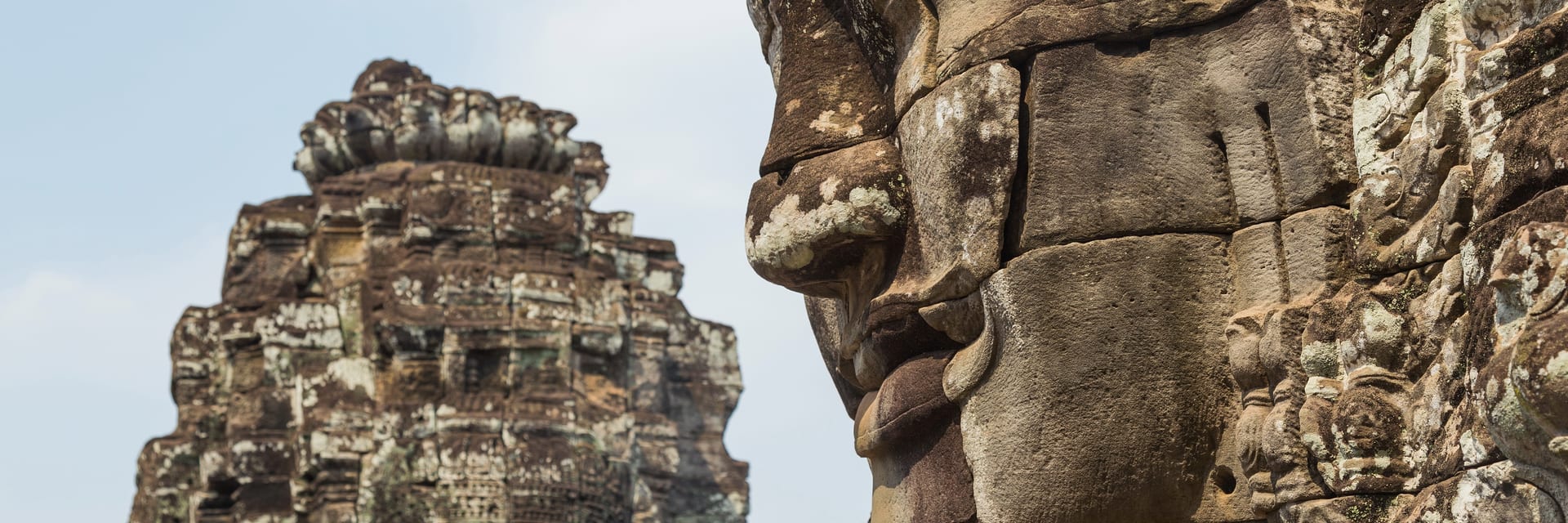
Photo: Marcin Konsek via Wikimedia Commons, CC BY-SA 4.0
Talk to a travel expert - call +1 (323) 800 6001, 24/7.
Real people, no bots. We plan flights, hotels, transfers and tours together and book everything over the phone. Prefer to start online? Use Plan My Vacation and we call you back.
A Vietnam and Cambodia tour package from Fond Travels combines two countries in one trip: you fly into Hanoi, work your way south through Ha Long Bay, the old imperial cities, Ho Chi Minh City and the Mekong Delta, then cross to Siem Reap for the temples of Angkor and fly home from there. Most plans run 12 to 16 days. Call +1 (323) 800 6001 at any hour and a travel expert builds the flights, hotels, guides and transfers with you by phone.
These two countries pair naturally. Vietnam gives you length and variety, from the street food of the north to the beaches of the center and the river life of the south, and Cambodia adds the greatest set of ruins in Southeast Asia. The regional flight between them takes about two hours and the dry season overlaps, so one trip covers both comfortably. This page sets out a realistic route, how the flights work from the US, the months that suit the weather, how Angkor temple passes are sold, and the entry rules US citizens need to sort out before departure.
A 14-day Vietnam and Cambodia itinerary
The route below runs north to south and ends in Cambodia, which avoids backtracking and lets us buy an open-jaw ticket into Hanoi and home from Siem Reap or Ho Chi Minh City. Twelve days works if you drop one stop; sixteen lets you add a beach or slow down in the center.
| Days | Where | Highlights |
|---|---|---|
| Days 1-2 | Travel from the US | Overnight flight with one connection in East Asia; arrive in Hanoi and rest |
| Days 3-4 | Hanoi | Old Quarter walking tour, Temple of Literature, Hoan Kiem Lake, a water puppet show and an evening street-food walk |
| Days 5-6 | Ha Long Bay or Lan Ha Bay | Overnight boat among the limestone karsts, caves, a swim stop and sea kayaking, then back to Hanoi |
| Days 7-8 | Hue or Hoi An | Short domestic flight; the imperial citadel and royal tombs at Hue, or the lantern-lit old town, tailors and beach at Hoi An |
| Days 9-10 | Ho Chi Minh City | Reunification Palace, the War Remnants Museum, Ben Thanh market and a day at the Cu Chi tunnels |
| Day 11 | Mekong Delta | Boat through the canals at Ben Tre or Can Tho, a floating market at dawn and lunch in a village home |
| Days 12-14 | Siem Reap | Angkor Wat, Angkor Thom and the Bayon, Ta Prohm, a sunset from a quieter temple and Tonle Sap lake |
| Day 15 | Return to the US | Flight home from Siem Reap with one or two connections |
Flights from the US to Vietnam and Cambodia
There is no nonstop service between the United States and Cambodia, and service to Vietnam is limited, so nearly every itinerary connects at least once. From the West Coast the usual connecting points are Tokyo, Seoul, Taipei, Hong Kong, Singapore or Bangkok, for roughly 19 to 24 hours in total. From the East Coast and the Midwest, couples and families also route through Istanbul, Doha, Dubai or a European hub, which usually lands in the 22 to 27 hour range. We compare routings side by side for your dates rather than assuming one hub is always better.
The ticket that makes this trip work is an open jaw: into Hanoi (HAN) and home from Siem Reap (REP), so you never repeat a leg. Flights out of Siem Reap connect through Bangkok, Singapore, Ho Chi Minh City or Kuala Lumpur, because that airport is served mostly by regional aircraft. If the return adds too many hours, see Angkor mid-trip and finish in Ho Chi Minh City (SGN) instead.
Inside the trip you will take two or three short flights of about an hour and a half each: Hanoi to Da Nang, Da Nang to Ho Chi Minh City, and Ho Chi Minh City to Siem Reap. Regional baggage rules are tighter than on the long-haul ticket, so we book the checked allowance in advance rather than leaving it to the airport counter.
When to go to Vietnam and Cambodia
November to March is the window most travelers should aim for. Cambodia is dry and the Angkor causeways are comfortable to walk, northern Vietnam is cool and clear, and the south is warm without the heaviest rain. Vietnam is long enough that no single month is perfect everywhere, so the route matters as much as the date.
- November to March: the main season for both countries. December and the Lunar New Year period are the busiest, so book six to nine months ahead.
- Tet, the Lunar New Year, usually falls in late January or February and closes many family-run businesses for several days while domestic travel fills up. We check the exact dates for your year before booking.
- April and May: hot across the region, especially in Siem Reap and the Mekong Delta, but quieter at the temples if you start early.
- June to October: the wet months. Rain is often a heavy afternoon burst rather than an all-day drizzle, and central Vietnam sees storms from September into November.
Ha Long Bay has its own pattern. Winter mornings can be grey and misty, and boats are occasionally held in port in bad weather. If a clear bay matters to you, October, November, March and April are the safer choices.
What is included in the package
- Round-trip flights from your US airport, usually as an open jaw into Hanoi and home from Siem Reap or Ho Chi Minh City.
- Internal flights down the length of Vietnam and the regional leg across to Cambodia, with checked baggage booked in advance.
- Hotels in each city, chosen for location so you can walk to the old quarters rather than sit in traffic.
- An overnight cruise in Ha Long Bay or Lan Ha Bay, with cabin category, meals and day activities set out before you pay.
- Private guides and drivers for Angkor, the Mekong Delta boat and the city touring.
- Angkor temple passes arranged for the number of days you need, and airport transfers throughout.
- Visa and arrival paperwork guidance for both countries, with official links, and one contact reachable 24/7 while you travel.
Where to stay on a Vietnam and Cambodia trip
In Hanoi, staying beside the Old Quarter puts the lake, the street food and the evening bustle at your door; the French Quarter nearby is calmer if noise bothers you. In Hoi An, choose between a small hotel a short walk from the old town and a beach property at An Bang with a shuttle into town.
In Ho Chi Minh City, District 1 keeps the museums, markets and restaurants within reach, and a higher floor is worth asking for because the street noise carries. In Siem Reap, almost everything sits within a fifteen minute drive of the temples, so the choice is between the lively area around the night market and a quieter garden property outside town. Most travelers see the Mekong Delta as a day trip from Ho Chi Minh City, but an overnight in Can Tho is what gets you to the floating market at dawn.
Angkor: passes, sunrise and seeing the temples well
Angkor is not one building but a park of many, spread across a wide area, and how you buy the pass shapes the visit. Passes are sold for one day, three days or seven days, bought in person at the official ticket office or online through the official operator, with a photograph taken for the pass. The three-day pass is the one most travelers should hold: it lets you split the park into an early morning and a late afternoon each day and skip the punishing middle hours.
Sunrise at Angkor Wat is the famous image and the most crowded moment in the park. If you want it, leave your hotel well before first light and accept that you will share the reflecting pool with a large group. Travelers who care more about quiet often do the reverse: enter at opening, go straight to Ta Prohm or the Bayon while the sunrise crowd is still at Angkor Wat, and save the main temple for late afternoon.
- Dress code: shoulders and knees covered is required at Angkor Wat and expected across the park; bring a light long-sleeved layer.
- Heat: the stone radiates by mid-morning, so we schedule a hotel break in the middle of the day and go back out after three.
- Beyond the main circuit: Banteay Srei for carving, Beng Mealea for ruins the jungle has taken back, and Preah Khan for quiet corridors.
- Food and diets: vegetarian, vegan and halal requests are workable in tourist areas, and we note allergies with hotels and guides in advance.
- Pace: two full temple days beat three half-hearted ones, so we would rather add a Tonle Sap afternoon than a fourth temple morning.
Entry rules for US citizens in 2026
Governments change these rules often, so confirm them on official sources before you travel. Recent rules for US passport holders:
- Vietnam: US citizens need a visa. The usual route is the government e-visa, which is issued for stays of up to 90 days and applied for on the official Vietnamese immigration site. The port of entry you name on the application has to match the airport you actually land at, so tell us your routing before you apply.
- Cambodia: US citizens need a visa too. Cambodia offers an official e-visa applied for online, and a visa arranged on arrival at the airport, but the rules and the accepted documents change, so confirm the current position on the official Cambodian government site before you travel and we will send you the link.
- Passport: valid for at least six months beyond arrival for both countries, with blank pages for stamps.
- Photographs: both visa processes ask for a recent passport-style photograph in a set format, so have a digital copy ready.
- Connections: staying airside in Tokyo, Seoul, Taipei, Hong Kong, Singapore, Bangkok or the Gulf normally needs no visa for US citizens, but an overnight outside the airport may.
Before booking, read the current US State Department travel advisory for every country on your itinerary and consider enrolling in its STEP alert service. Rules for travelers on non-US passports, including green card holders, differ, so tell us every traveler's nationality when you call.
How to get more from your budget
- Fly into one country and out of the other. An open-jaw ticket removes a wasted internal leg and usually costs about the same as a round trip.
- Pick three regions, not five. Every extra stop adds a transfer day, and a slower route through fewer places is the one people enjoy more.
- Travel in shoulder months. Late October, early November and March give you dry-season weather with fewer people on the Angkor causeways.
- Spend on guides, not on hotel category. A good private guide at Angkor changes the trip more than an extra star on the room.
- Book the Ha Long overnight early. The smaller boats with the better cabins fill months ahead for the dry season.
How booking by phone works
- Call +1 (323) 800 6001 at any hour to reach a travel expert.
- Describe the trip: dates, departure city, who is traveling, the pace you like and any meal, room or mobility needs.
- Hear your options and the total for flights, hotels, transfers and tours, with the fare and cancellation rules explained.
- We book and email everything, with a checklist of documents and arrival forms, and stay reachable 24/7 while you travel.
Why book with Fond Travels
Fond Travels, LLC is an independent US travel agency in Woodbridge, Virginia, planning trips since 2017. We are not tied to one airline, resort brand or tour company, so we compare options side by side and recommend what fits your group. We are rated 4.8 out of 5 by more than 2,500 Google reviewers and answer the phone around the clock. Read how booking by phone works with our team.
More trips to consider
- Vietnam tour packages from the USA if you would rather give one country the whole trip.
- Cambodia and Angkor vacation packages for a temple-focused trip.
- Thailand, Vietnam and Cambodia tour packages to add Bangkok and a beach.
- Laos vacation packages for a quieter third country on the Mekong.